

Table of Contents
- Comparing Electric vs Hybrid Fleet Vehicles: The Key Differences
- Electric vs Hybrid Fleet Vehicles: A Side-by-Side Comparison
- Pros and Cons of Each Option for UK Fleets
- Electric Vehicle Fleet Charging: What Infrastructure You Need
- Whole-Life Cost Analysis for Fleet Vehicles: Getting the Numbers Right
- Building an Electric Van Fleet for Field and Care Teams
- Business Fleet Electrification: A Practical Transition Plan
- Frequently Asked Questions
Last Updated: October 15, 2026
Comparing Electric vs Hybrid Fleet Vehicles: The Key Differences
Comparing electric vs hybrid fleet vehicles comes down to one question: can the vehicle complete its daily duty cycle without compromise? Electric vans suit fixed, predictable routes with depot charging. Hybrids suit unpredictable mileage and long rural runs. This guide from OVL Group breaks down the running costs, charging practicalities and whole-life figures so you can decide with confidence.
The core difference is where the energy comes from. A hybrid vehicle combines a petrol or diesel engine with a small battery and electric motor, so it can switch between power sources but always carries a fuel tank. A battery electric vehicle runs on a larger battery and an electric motor only, with no combustion engine at all. That single distinction drives everything else: refuelling, servicing, tax treatment and residual values.
For a fleet of 50 or more vans, the decision rarely lands on one technology alone. Most operators we advise end up running a mix, and the strongest results come from matching each vehicle to the route it actually covers.
Electric vs Hybrid Fleet Vehicles: A Side-by-Side Comparison
The table below summarises the practical differences that matter most to fleet managers weighing up an electric vs hybrid fleet.
| Factor | Battery Electric | Hybrid |
|---|---|---|
| Energy source | Grid electricity only | Petrol or diesel plus battery |
| Refuelling | Depot or public charge points | Fuel stations, no charging needed |
| Servicing | Fewer moving parts, lower routine cost | Engine plus electric systems to service |
| Best for | Fixed urban and suburban routes | Long, unpredictable or rural mileage |
| Range anxiety | Managed with route planning | Minimal, fuel backup always available |
| Tax treatment | Benefit-in-Kind based on low emissions | Based on the engine's emissions |
The right column rarely wins on cost alone. Where hybrids pull ahead is flexibility: no charging infrastructure, no route planning, no change to driver habits. Where electric wins is the long game, with lower energy and servicing costs.
Pros and Cons of Each Option for UK Fleets
Each technology carries genuine trade-offs, and honest fleet planning means naming them.
Electric pros: lower energy cost per mile, fewer servicing items, zero tailpipe emissions that help with clean air zone compliance, and strong Benefit-in-Kind advantages for salary sacrifice schemes. Electric cons: range limits on cold days, reliance on charging infrastructure, and higher upfront lease rates on some models.
Hybrid pros: no charging requirement, familiar refuelling, and no range anxiety for drivers covering long or variable distances. Hybrid cons: higher fuel and servicing costs than electric, and Benefit-in-Kind rates that are less favourable than pure electric for company car drivers.
Electric Vehicle Fleet Charging: What Infrastructure You Need
Electric vehicle fleet charging is the part most operators underestimate. A single home charger is simple; a depot charging 20 vans overnight is an electrical project.
Start with a load assessment. Your local distribution network operator will confirm whether the site's supply can handle the additional demand, and upgrades can take time to schedule. From there, most depots choose between AC charging, which is slower but cheaper to install and ideal for overnight dwell, and DC rapid charging for top-ups during the day.
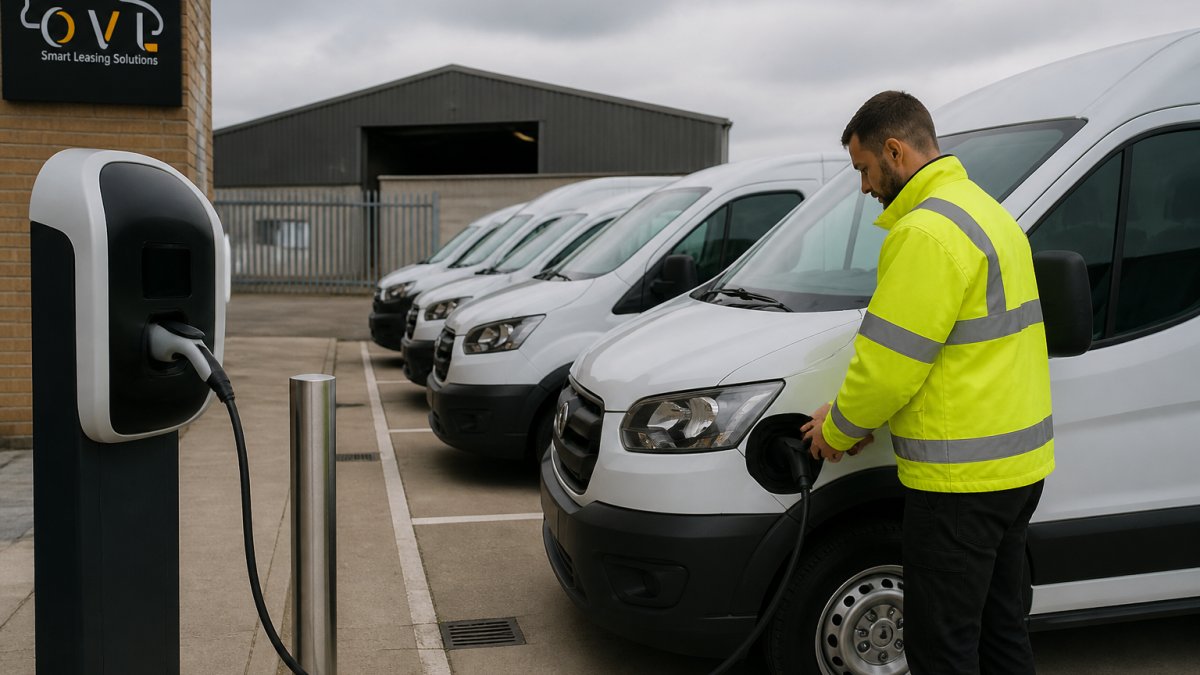
A practical setup usually includes:
- Overnight AC charge points for vehicles that return to base
- One or two rapid chargers for vehicles on split shifts
- A charge management system to avoid peak-load penalties
- Driver access cards and simple reporting for cost allocation
For care teams and field engineers who park at home, workplace and home charging arrangements need clear policy. HMRC treats reimbursement for business charging differently from domestic electricity, so keep records clean from day one.
Whole-Life Cost Analysis for Fleet Vehicles: Getting the Numbers Right
Whole-life cost analysis for fleet vehicles is where the electric versus hybrid argument is actually settled. The sticker price tells you very little. What matters is the total cost across the lease term.
Build your comparison around five lines:
- Finance: the monthly lease rate over the term
- Energy or fuel: cost per mile multiplied by annual mileage
- Servicing, maintenance and repairs: routine and unexpected
- Tax: Benefit-in-Kind and any salary sacrifice implications
- Remarketing: residual value at the end of term
Electric vans tend to win on energy, servicing and tax. Hybrids sit in the middle. The crossover point depends on your annual mileage and how long you hold the vehicle. For HMRC guidance on Benefit-in-Kind and salary sacrifice, check the official rates directly, as they change each tax year.
Building an Electric Van Fleet for Field and Care Teams
An electric van fleet works best when routes are short and predictable. Domiciliary care teams and field engineers are often the strongest candidates, because their daily mileage is modest and their vehicles return to a base or home each night.
For a care provider in Brightwell Baldwin or the wider Oxfordshire area, the pattern is straightforward: staff cover a defined patch, mileage rarely exceeds the comfortable range of a mid-size electric van, and vehicles charge overnight. That combination removes most of the objections.
What makes it work in practice:
- Match van size to the actual load, not the biggest option
- Confirm each driver has a viable charging location
- Build a short trial with two or three vehicles before committing the whole fleet
- Use salary sacrifice to make the switch attractive to staff
Business Fleet Electrification: A Practical Transition Plan
Business fleet electrification does not have to happen all at once. A staged plan reduces risk and lets you learn from real data.
- Audit your routes. Log real mileage and dwell times for a month.
- Assess your sites. Check power capacity at every depot and base.
- Model the costs. Run whole-life figures for electric, hybrid and your current vehicles.
- Pilot. Convert one route or one region first.
- Review. Compare actual running costs against your model.
- Scale. Roll out to the rest of the fleet with proven numbers.
This staged approach suits growing SMEs and larger operators alike. It also gives finance directors the evidence they need before committing budget.
The challenge for most fleet managers is not choosing between electric and hybrid, it is finding the right mix without disrupting day-to-day operations. OVL Group specialises in tailored vehicle leasing and fleet management, backed by whole-life cost analysis, our FleetManagerPlus system and dedicated account management. If you are weighing up the switch, it is worth browsing our Electric / Hybrid Leasing options and current Vehicle Leasing Special Offers to see what is available on the models that suit your routes. We also help businesses set up salary sacrifice schemes that make the switch attractive to staff. Get started with OVL Group and build a fleet that cuts operational costs while keeping your teams on the road.
Frequently Asked Questions
Are electric or hybrid vehicles better for a business fleet?
It depends on your daily mileage and routes. Electric vehicles suit predictable, shorter journeys with depot charging, where running cost are lowest. Hybrids, particularly plug-in hybrids, work better for high-mileage or rural routes where charging access is limited. Many UK fleets run a mix of both, matching each vehicle type to the duty cycle it handles best rather than committing to one technology across the board.
Are electric fleet vehicles cheaper to run than hybrids?
Electric vehicles usually have fewer moving parts to service. Hybrids still need engine servicing and fuel. However, the total picture depends on your charging setup, annual mileage and how you fund the vehicles. A whole-life cost analysis covering finance, fuel or energy, servicing, maintenance and repairs, plus tax, is the only reliable way to compare them fairly.
What charging infrastructure does a business need for an electric fleet?
Most fleets start with depot charging: dedicated AC charge points for overnight top-ups, sized to the number of vehicles returning each evening. Higher-powered DC charging helps for rapid turnaround between shifts. You also need to think about load capacity, smart charging to manage peak demand, and access to public charging for drivers on the road. Planning charging alongside your vehicle order prevents costly retrofits later.
Can a mixed electric and hybrid fleet work for a UK business?
Yes, and many UK businesses run one. Electric vans cover short urban routes and depot-based work, while hybrids handle longer or less predictable journeys where charging is harder. A mixed fleet lets you electrify where the savings are clearest first, then expand as charging and vehicle options improve. Reviewing whole-life cost across the whole fleet shows where each type earns its place.