


Table of Contents
- Commercial Vehicle Leasing vs Buying: The Core Differences
- Financial Comparison: Leasing and Buying Costs
- Whole Life Cost Analysis for Fleet Management
- Business Van Leasing Tax Benefits and HMRC Considerations
- HMRC Capital Allowances for Commercial Vehicles
- Operational Advantages: Fleet Management and Maintenance
- Making the Right Choice for Your Business
- Frequently Asked Questions
Last Updated: September 26, 2026
Commercial Vehicle Leasing vs Buying: The Core Differences
Commercial vehicle leasing vs buying for businesses comes down to one fundamental choice: do you want to own assets or access them on demand? At OVL Group, we've guided hundreds of fleet managers through this decision, and the answer depends entirely on your operational priorities.
When you lease a vehicle, you're paying for the right to use it for a fixed period, typically two to four years. You don't own it. The leasing company retains ownership, handles major repairs, and manages the vehicle at end of term. When you buy, you own the asset outright or finance it through a loan. You're responsible for all maintenance, repairs, insurance, and eventual disposal.
The distinction sounds simple. In practice, it reshapes your entire fleet strategy. Leasing locks in predictable monthly costs. Buying gives you long-term ownership and potential residual value. One approach suits field service operations with rapid fleet turnover. The other fits businesses that keep vehicles for seven years or more.
Most businesses don't realise how much this choice affects their tax position, cash flow, and administrative burden. The wrong decision can have significant financial implications.
Financial Comparison: Leasing and Buying Costs
Here's where the numbers diverge sharply. Leasing spreads costs across monthly payments, typically including maintenance, servicing, and breakdown cover. Buying requires upfront capital or a loan, then ongoing costs for repairs, servicing, tyres, and depreciation.
With leasing, you know your monthly outlay. There are no surprises. A three-year lease on a commercial van locks in your costs from month one. With buying, unexpected repairs can spike your expenses. A gearbox failure or engine problem on an older vehicle can incur significant costs in a single month.
Here's a practical example: a field service company with 15 vans faces vastly different cash flow scenarios depending on their approach. Lease all 15, and costs are predictable. Own all 15, and you're managing repair budgets, parts inventory, and mechanic relationships across your entire fleet.
The lease approach also eliminates residual value risk. When the lease ends, you return the vehicle. The leasing company absorbs any drop in market value. With ownership, you're exposed to that risk directly. A vehicle's value can depreciate significantly over time.
Many finance directors overlook this: leasing separates operational costs from capital expenditure. That distinction matters for budgeting, forecasting, and board reporting.
Whole Life Cost Analysis for Fleet Management
Whole life cost analysis is the proper way to compare leasing and buying. It accounts for every expense from purchase to disposal, not just the headline monthly payment.
A whole life cost model includes:
- Vehicle acquisition cost (purchase price or lease payment)
- Fuel consumption and efficiency
- Servicing and maintenance (SMR)
- Tyres and wear items
- Insurance and breakdown cover
- Road tax and compliance costs
- Depreciation (for owned vehicles)
- Administrative overhead
When you add these together, the true cost per mile becomes clear. A cheap lease might hide high fuel costs or limited maintenance cover. An apparently affordable purchase might carry steep repair risk on an older model.
OVL Group's approach to whole life cost analysis examines all seven factors together. Many businesses focus only on the monthly payment, missing the full picture. A lease that includes all servicing can often be more cost-effective per mile than a financed purchase that excludes repairs.
The analysis also reveals hidden advantages of leasing for specific use cases. A domiciliary care business in Brightwell Baldwin managing 30 vehicles benefits from predictable servicing schedules. A field service operation with high mileage gains from knowing exactly what each vehicle costs to run.
Whole life cost analysis isn't theoretical. It's the framework that separates smart fleet decisions from expensive ones. When you explore OVL Group's Vehicle Leasing Special Offers and Van Leasing Special Offers, you'll discover how competitive lease rates combined with included maintenance deliver genuine whole life cost advantages over ownership.
Business Van Leasing Tax Benefits and HMRC Considerations
Tax efficiency is where many businesses leave money on the table. Business van leasing vs buying for businesses triggers different tax treatments, and understanding the distinction can save thousands annually.
When you lease a commercial vehicle, the monthly lease payments are typically fully tax-deductible as a business expense. HMRC treats the lease as an operational cost, not a capital purchase. That means the full lease payment reduces your taxable profit. For a business paying corporation tax, that deduction is immediate and straightforward.
When you buy a vehicle, you can't deduct the purchase price as a single expense. Instead, you claim capital allowances under HMRC rules. This spreads the tax relief over several years, which delays the benefit of the deduction.
However, and this is critical, salary sacrifice schemes change the equation entirely. If you offer employees a salary sacrifice scheme for vehicle leasing, the tax advantages multiply. Employees get a vehicle without paying income tax or National Insurance on the benefit. The business saves employer's National Insurance contributions. Everyone wins.
This is where leasing shines for businesses with multiple employees. A care provider in Oxfordshire with 25 staff members can offer salary sacrifice leasing, cutting both employee and employer tax costs dramatically. Buying vehicles doesn't offer the same flexibility.
HMRC's position on business vehicle tax is clear: HMRC guidance on vehicle expenses and capital allowances details how different acquisition methods affect your tax position. Leasing simplifies compliance because the monthly payment is a straightforward deduction. Buying requires tracking depreciation, residual values, and capital allowance claims across multiple years.
HMRC Capital Allowances for Commercial Vehicles
Capital allowances are the mechanism HMRC uses to let businesses deduct the cost of assets over time. For commercial vehicles, understanding how capital allowances work is essential if you're buying rather than leasing.
When you purchase a commercial vehicle, you can claim capital allowances on the purchase price. This isn't a single deduction, it's spread over several years through annual investment allowance or writing-down allowance.
The annual investment allowance (AIA) lets you deduct up to £1,000,000 of capital expenditure in a single tax year (Claim capital allowances: Annual investment allowance). If your business buys a fleet of vans totalling £80,000, you can deduct the entire amount in year one, not spread over years. This front-loads your tax relief and improves cash flow in the acquisition year.
However, the AIA is a one-off relief per tax year. Once you've used your allowance, additional purchases fall into the writing-down allowance (WDA) pool, which typically allows 18% per year on a reducing balance. That's slower, and the benefit is delayed.
Leasing sidesteps this complexity entirely. There's no capital allowance calculation because you're not purchasing an asset. The lease payment is simply an expense, deductible in full each year.
For small businesses, this simplicity matters. Calculating capital allowances, tracking residual values, and managing multiple vehicle disposals adds administrative overhead. Leasing eliminates that burden.
HMRC's detailed guidance on capital allowances for vehicles outlines the precise rules, but the practical takeaway is this: if your business wants to avoid capital allowance complexity and maintain predictable tax treatment, leasing is the path of least resistance. If you want to maximise upfront tax relief on a large fleet purchase, buying, combined with AIA claims, can deliver faster deductions.
Operational Advantages: Fleet Management and Maintenance
The operational case for leasing often outweighs the financial argument, especially for growing businesses managing large fleets.
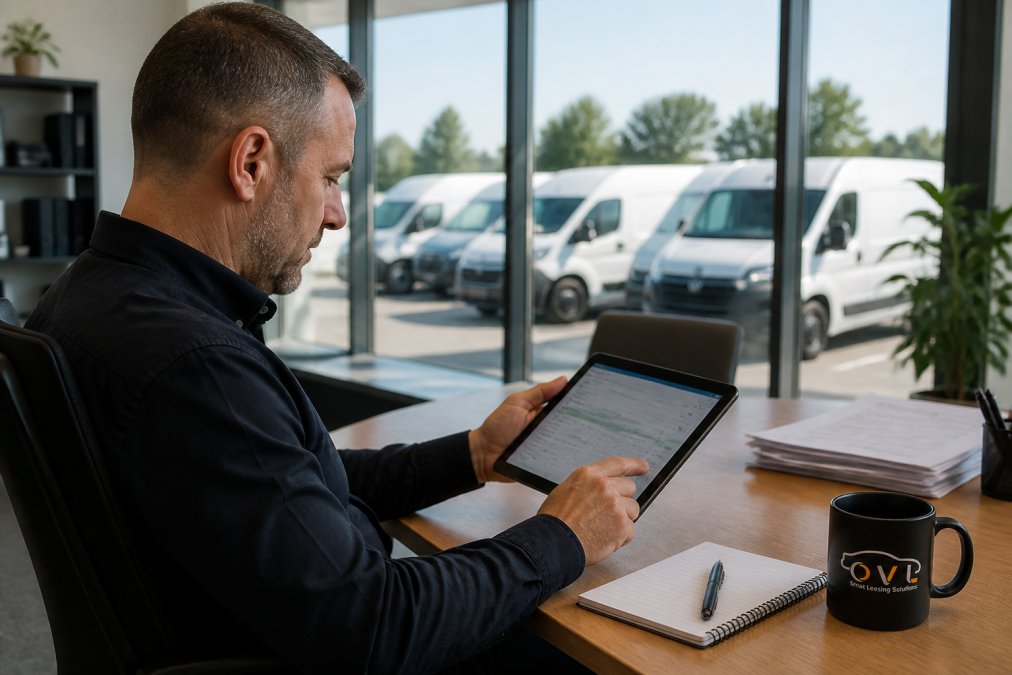
When you lease, the leasing company typically handles servicing, maintenance, and breakdown cover. You don't manage repair schedules or negotiate with mechanics. A fleet manager in Brightwell Baldwin can focus on deployment and customer service instead of chasing invoices from garages.
For businesses with 50+ vehicles, this is transformative. Owned vehicles require in-house fleet management expertise or outsourced workshop relationships. Leased vehicles come with a single point of contact: your leasing provider. OVL Group's FleetManagerPlus system simplifies administration further, consolidating servicing, compliance, and cost tracking in one platform.
Maintenance predictability is another operational win.
Making the Right Choice for Your Business
The decision between commercial vehicle leasing vs buying for businesses hinges on five questions. Answer them honestly, and the right path becomes clear.
| Leasing | Buying |
|---|---|
| Fixed monthly costs including maintenance | Variable costs; repairs unpredictable |
| No ownership; no residual value risk | Asset ownership; potential equity |
| Simpler tax treatment; full deduction | Capital allowances; delayed relief |
| Salary sacrifice eligible; tax-efficient benefits | No employee benefit structure |
| Fresh vehicles every 3-4 years | Long-term ownership; 7+ year cycle |
| Minimal administrative burden | Requires fleet management expertise |
| Mileage limits; excess charges apply | Unlimited mileage; depreciation risk |
| Ideal for predictable budgets | Ideal for cash-rich businesses |
Frequently Asked Questions
Is it more tax-efficient to lease or buy a commercial vehicle in the UK?
Leasing typically offers better tax efficiency for most businesses. Lease payments are fully deductible as business expenses, and you avoid capital allowances complexity. Buying allows HMRC capital allowances, but leasing provides predictable costs and simpler tax treatment. The best option depends on your cash flow, fleet size, and how long you plan to keep vehicles. A whole life cost analysis comparing both scenarios for your specific situation will clarify which approach saves more.
What are the long-term cost implications of leasing vs buying commercial vehicles?
Leasing spreads costs across the contract term with fixed monthly payments, making budgeting predictable. Buying requires upfront capital but builds equity; however, you bear depreciation risk, maintenance costs, and eventual disposal expenses. Over 5+ years, buying may cost less per mile if vehicles are well-maintained, but leasing eliminates residual value uncertainty and major repair bills. Fleet size matters: larger fleets benefit more from leasing's simplicity and account management support.
How does VAT recovery differ between leasing and buying a van for business?
When you lease a van, VAT on the lease payment is recoverable as input tax if your business is VAT-registered. When you buy, you recover VAT on the purchase price upfront. Both approaches recover VAT, but leasing spreads the recovery over the contract term, whilst buying front-loads it. For cash flow planning, leasing can be more manageable. The net VAT position is similar, but the timing and administration differ significantly.
What maintenance and support benefits does leasing offer over buying?
Leasing agreements typically include servicing, repairs, breakdown cover, and tyre replacement, removing the burden of managing these separately. You avoid unexpected repair costs and benefit from manufacturer warranties. Buying requires you to arrange and pay for all maintenance, which increases operational complexity for growing fleets. For businesses managing 50+ vehicles, leasing's included support and fleet management systems dramatically reduce administrative overhead and downtime risk.