

Last Updated: 6 November 2026
Quick Summary
Choosing the right fleet tracking hardware starts with auditing the vehicles you already run, then matching each device type to how that vehicle earns its keep. Plug-in units suit cars and light vans, hard-wired units suit shared vans and minibuses, and battery-powered trackers suit trailers and plant. Confirm compatibility with the vehicle's electrical system before you order.
- Plug-in trackers fit in minutes via the OBD port but are easy to unplug.
- Hard-wired units resist tampering but need a fitter who knows your vehicle models.
- Battery-powered asset trackers suit trailers and plant with no power supply of their own.
- Log serial number, registration, fit date and firmware version in a device register.
- Pilot installation on ten vehicles at one site before scaling across the fleet.
Table of Contents
- Why Fleet Tracking Hardware Decisions Start With Your Vehicles
- Fleet Tracking Devices: Plug-In, Hard-Wired and Battery-Powered
- Matching Hardware to Vans, Cars, Minibuses and Assets
- Fleet Tracking Device Installation: What to Plan For
- Fleet Tracking System Features That Earn Their Place
- Fleet Tracking for Electric Vehicles: What Changes
- Connectivity, Durability and Keeping Data When Signals Drop
- Planning Your Fleet Tracking Rollout With OVL Group
- Frequently Asked Questions
Why Fleet Tracking Hardware Decisions Start With Your Vehicles
Choosing the right fleet tracking hardware starts with the vehicles you already run, not with the device catalogue.
At OVL Group, we work with fleet operators to match hardware to vehicle type and daily duty cycles, because that is where clean data and fewer installation headaches come from.
Below, we will show you how to work through the decision in the right order, from vehicle audit to installation plan, so the hardware you buy still earns its place in three years.
Fleet Tracking Devices: Plug-In, Hard-Wired and Battery-Powered
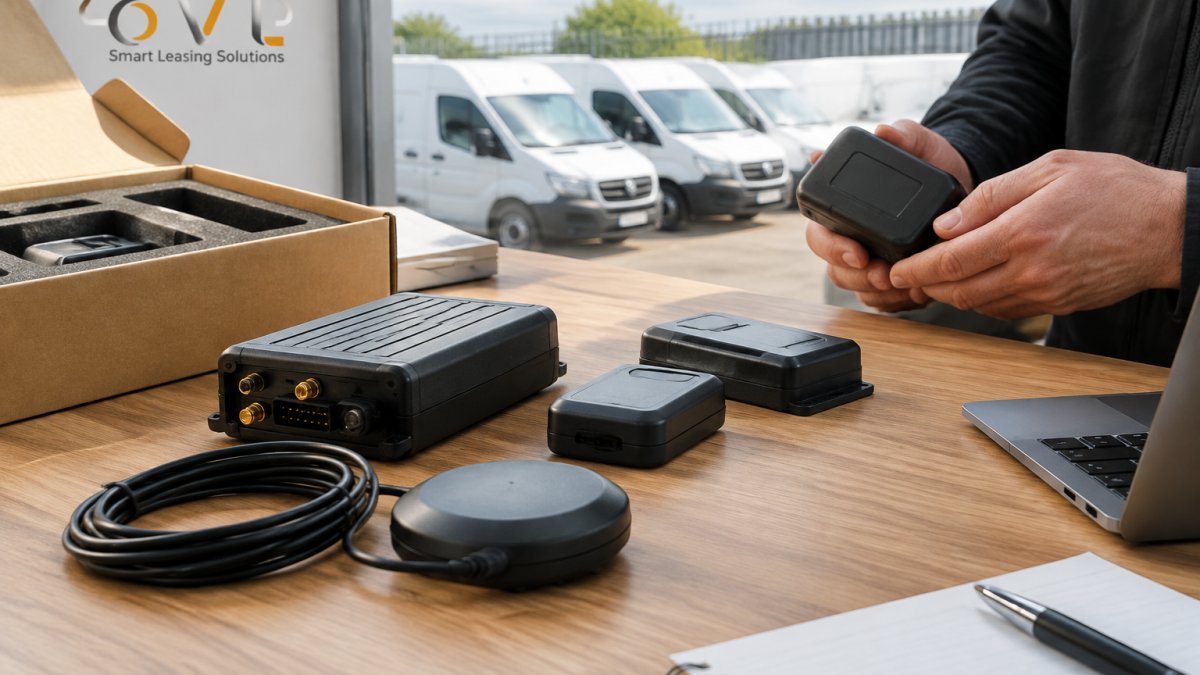
Fleet tracking devices fall into three families, and each suits a different vehicle and risk profile. A fleet tracking device is a unit that reports a vehicle's location and status to fleet management software, and the way it draws power decides where it can go.
- Plug-in trackers connect to the OBD port and take minutes to fit. Best for cars and light vans you can move between drivers.
- Hard-wired trackers connect to the vehicle's electrical system and hide behind trim. Best for vans and minibuses where tamper detection matters.
- Battery-powered trackers run on their own cells and need no wiring. Best for trailers, plant and assets that have no power supply of their own.
The trade-off is straightforward. Plug-in units are easy to move but easy to unplug. Hard-wired units resist interference but need a fitter. Battery units suit assets without power but need a replacement plan.
Device type | Power source | Best for | Watch out for |
|---|---|---|---|
Plug-in | OBD port | Cars, light vans | Easy to remove |
Hard-wired | Vehicle electrics | Vans, minibuses | Needs a fitter |
Battery-powered | Internal cells | Trailers, plant, assets | Cell replacement cycle |
Matching Hardware to Vans, Cars, Minibuses and Assets
Match the tracker to how the vehicle earns its keep, then confirm it is compatible with the vehicle's electrical system before you order. A domiciliary care fleet doing short urban runs has different needs from a field service van covering rural Oxfordshire lanes.
For vans, hard-wired units with driver identification suit vehicles shared between multiple drivers, so you know who was where. For company cars, plug-in trackers move easily when the vehicle changes hands.
Trailers, generators and plant rarely have power of their own, so battery-powered asset trackers are the practical answer. If you are adding vehicles to the fleet at the same time, it is worth reviewing MAXUS leasing deals and Toyota leasing options so the hardware order and the vehicle order land together.
Fleet Tracking Device Installation: What to Plan For
Fleet tracking device installation goes smoothly when you book fitting in batches, agree a power source for each unit and record the device serial against the registration plate.
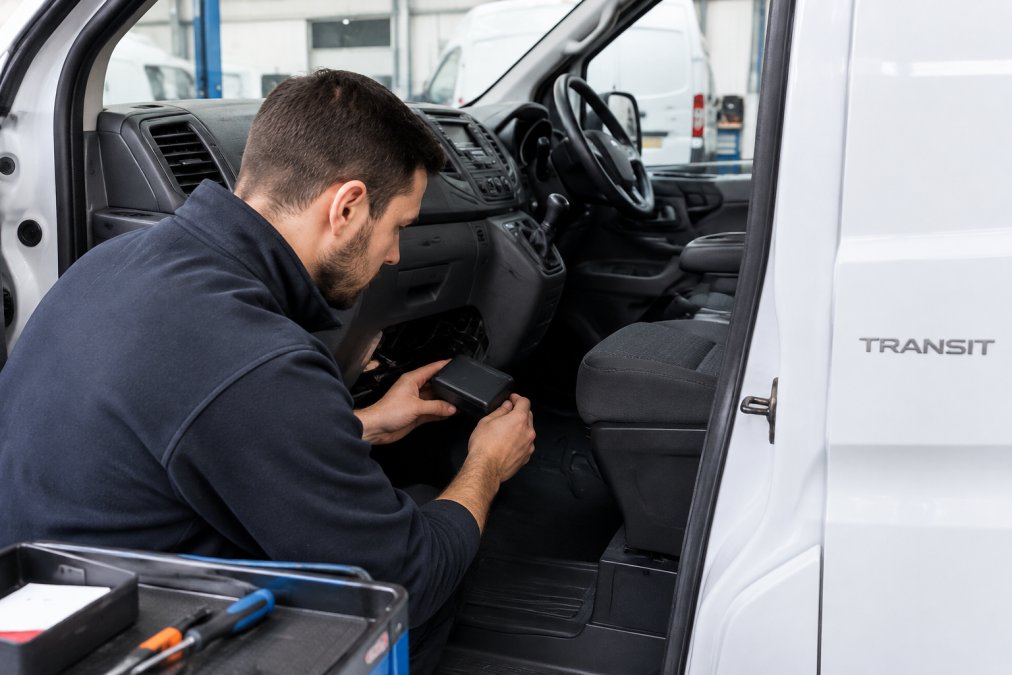
Plan for three things before the first van arrives:
- Time off the road. A hard-wired fit takes longer than a plug-in swap, so schedule it around the duty cycle.
- A named fitter. Use one installer across the fleet so wiring and placement stay consistent, and ask for a fitter who has worked on your vehicle models before.
- A device register. Log serial number, registration, fit date and firmware version, so maintenance and replacement stay simple.
Watch out: fitting a hard-wired unit to a vehicle still under a finance agreement without checking the terms can create a problem at handback. Confirm the position before you drill.
Installation checks that prevent later faults
A tracker that is fitted but not verified is a liability. Before a vehicle goes back on the road, the fitter should confirm that the unit powers up from the vehicle's own supply, acquires a position fix outdoors and reports to the software platform.
Placement matters as much as wiring. Hard-wired units should sit where they are not visible from the driver's seat and away from heat sources.
Maintenance and device lifecycle
Installation is the start of the device lifecycle, not the end. Build a simple maintenance rhythm into your fleet calendar:
- Firmware updates. Check the platform's release notes quarterly and apply updates during scheduled downtime, not mid-job.
- Battery replacement. Battery-powered asset trackers have a finite cell life; plan replacement by serial number rather than waiting for a unit to go silent.
- Fault diagnosis. A tracker that stops reporting is usually a power, antenna or SIM issue. Keep a spare unit of each type so a faulty device can be swapped without taking a vehicle off the road for long.
Compatibility before you order
Confirm compatibility with the vehicle's electrical system before you order. Stop-start systems, smart alternators and high-voltage electrics all affect how a hard-wired unit should be connected. On electric vehicles, use a fitter who understands high-voltage systems and never let a general installer near the wrong loom. If you are adding vehicles to the fleet at the same time, it is worth reviewing MAXUS leasing deals and Toyota leasing options so the hardware order and the vehicle order land together, and our vehicle rental service can cover short-term gaps while new vehicles are being fitted.
Fleet Tracking System Features That Earn Their Place
Fleet tracking system features are worth paying for only when they change a decision you actually make. Real-time location, geofencing, driver behaviour reporting and maintenance alerts all earn their place. Vanity dashboards do not.
We group features into three tiers:
- Core: real-time location, trip history, geofencing and alerts. Every fleet needs these.
- Operational: driver identification, driver behaviour scores, route optimisation and utilisation reporting.
- Strategic: maintenance planning, fuel consumption trends and total cost of ownership reporting.
Start with core, add operational once drivers are consulted, and bring in strategic reporting when you review the fleet budget. The Information Commissioner's Office guidance on monitoring workers is essential reading before you switch on behaviour tracking, because monitoring staff at work carries legal duties around transparency and consultation.
Fleet Tracking for Electric Vehicles: What Changes
Fleet tracking for electric vehicles changes the data you need, not the principle. An EV tracker should report state of charge, charging events and energy use alongside location, so you can plan routes around real range rather than guesswork.
The hardware itself is often the same unit, but the software layer matters more. For operators moving to electric, our BYD leasing and MG leasing pages set out the models and the benefit-in-kind position, which pairs naturally with charge-aware tracking. If you would rather try electric before committing, our Electric / Hybrid Leasing options and used electric vehicle leasing make it straightforward to add charge-aware tracking to the fleet without waiting for a factory order.
One practical point: hard-wired installation on an EV needs a fitter who understands high-voltage systems. Do not let a general installer near the wrong loom.
Connectivity, Durability and Keeping Data When Signals Drop
Connectivity and durability decide whether your data is complete. A tracker that loses signal in a rural dead spot and forgets the trip is worse than no tracker, because it creates false confidence.
Resilience when connectivity or power is lost
Most buyers compare trackers on features and never ask what happens when the signal drops. That is a question worth asking before choosing a unit.
- Offline data storage. A good unit buffers records internally when it cannot reach the network and uploads them when coverage returns. Ask how many days of data the buffer holds and whether it survives a power cycle.
- Reconnection behaviour. Check whether the unit reconnects automatically and backfills the gap, or whether it simply resumes from the current position and leaves a hole in the record.
- Backup power. Hard-wired units should have an internal backup battery so a disconnected main feed still produces a tamper alert and a final position. Battery-powered asset trackers need enough reserve to report a low-cell warning before they go silent.
Coverage across Oxfordshire
Check mobile-network coverage across your operating area, not just at the depot. For fleets running Brightwell Baldwin and the surrounding Oxfordshire lanes, coverage varies enough that offline storage is not optional. A unit that holds a week of records and backfills on reconnection will give you a complete picture even where signal is patchy. Ask the supplier which networks the device supports and whether it can fall back between them.
Durability in demanding environments
Durability matters too. Ruggedised hardware with tamper detection suits vans that work building sites and farm tracks. Ask about the operating temperature range and the ingress protection rating before you buy. A unit rated for dust and water ingress will outlast one that is not, and the difference shows up in replacement costs within a couple of years.
Measuring whether the hardware is earning its place
Once units are live, review the data against a baseline you set before installation. Compare fuel use, vehicle utilisation, unauthorised use, maintenance spend and administrative time over a quarter. If a device type is not changing a decision, it is not earning its place, and that is the moment to review the specification rather than add more units. Our Vehicle Leasing Special Offers are worth a look if you need vehicles while hardware is being reviewed.
Planning Your Fleet Tracking Rollout With OVL Group
A fleet tracking rollout works best as a staged plan: audit the vehicles, pilot on one depot, review the data, then scale. That sequence keeps costs controlled and gives drivers time to adjust.
We would run it like this:
- Week 1-2: vehicle and asset audit, device selection by type.
- Week 3-4: pilot installation on ten vehicles at one site.
- Week 5-6: review data quality, coverage gaps and driver feedback.
If you are refreshing vehicles as part of the rollout, our Renault leasing deals let you pair new vehicles with the tracking system from day one, and our Vehicle Leasing Special Offers and Van Leasing Special Offers are worth a look if you want to bring forward a replacement van or car to fit alongside the new hardware.
The challenge is not buying a tracker. It is building a hardware plan that still fits your fleet in three years. OVL Group can help you get there, with tailored leasing for cars, vans and minibuses, whole life cost analysis that includes finance, fuel, service, maintenance and repairs, and dedicated account management from first quote to renewal.
Frequently Asked Questions
What should I look for in fleet tracking hardware?
Start with the vehicles and routes you actually run. Check that the device suits your van, car or minibus, that it works on the mobile networks covering your operating area, and that it stores data when coverage drops. Look at how it is powered, whether it is hard-wired or plug-in, and whether the software gives you the reports your operations team will use. Durability matters for field service work, and so do clear contract terms. Compare total cost of ownership rather than sticker price alone.
What is the difference between a plug-in and hard-wired fleet tracker?
A plug-in tracker connects to the vehicle's diagnostic port, so fitting takes minutes and the unit can be moved between vehicles. That suits short-term hires or a mixed pool. A hard-wired tracker is connected to the vehicle's electrical system, which makes it harder to remove and lets it keep reporting when the ignition is off. For long-term leased vans and minibuses on duty around the clock, hard-wired is usually the better fit. Discuss both options during fleet tracking device installation so the choice matches how long you keep each vehicle.
Can fleet tracking hardware be fitted to electric vehicles?
Yes. Fleet tracking for electric vehicles uses the same broad device types, but the data you monitor changes. Instead of fuel consumption you are watching charge levels, charging events and how driving style affects range. Because EVs are quieter and often used on predictable community routes, geofencing and driver behaviour reporting become especially useful. Confirm with your provider that the hardware is compatible with your specific models and that installation will not affect the vehicle warranty or lease terms.
Does fleet tracking hardware need a SIM card?
Most units use an embedded SIM and a data subscription to send location updates to your fleet management software. That subscription is usually part of the ongoing cost, so check what is included and what happens if you exceed the data allowance. Some devices store data locally when the mobile network is unavailable and upload it once coverage returns. Ask about offline data storage and refresh rate before you commit, particularly if your drivers cover rural routes across Oxfordshire where signal can be patchy.